
Hull. 01482 345797
Leeds. 01132 779542
York. 01904 438005
Leeds. 01132 779542
York. 01904 438005
Posted on April 22, 2026
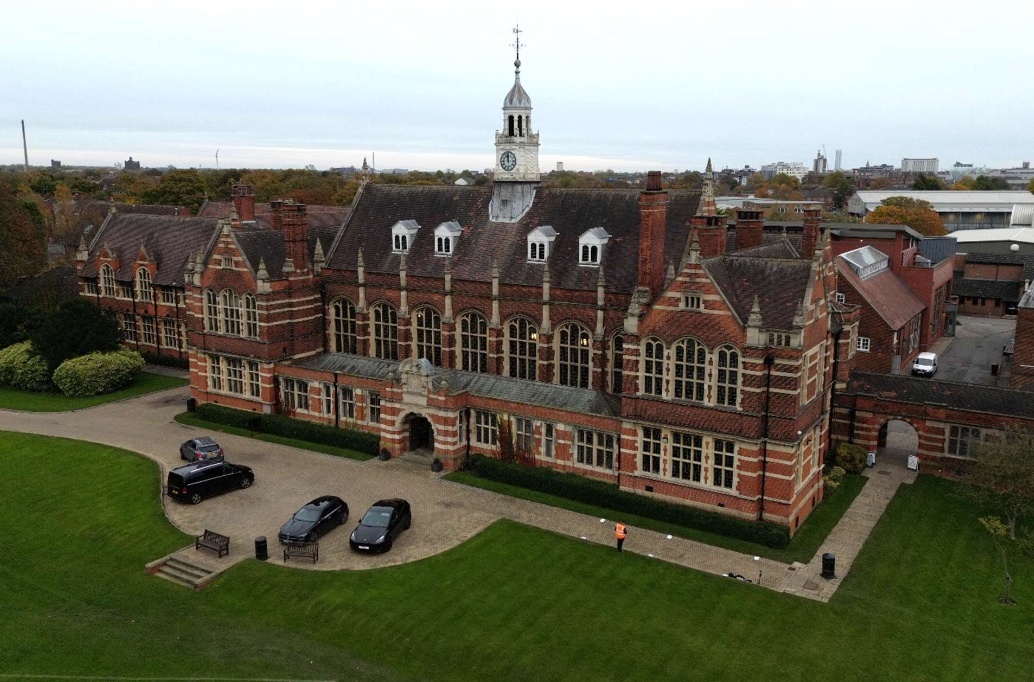
We completed a non-intrusive structural inspection to part of the iconic Great Hall roof structure at Hymers College in Hull - a Grade II listed building renowned for its Jacobean Revival architecture and distinctive clocktower and cupola. The project combined traditional engineering expertise with modern drone technology to deliver a comprehensive, minimally intrusive assessment of this historic structure.
A sensitive approach to a significant building
Given the heritage status of the Great Hall, our approach prioritised conservation‑led principles: minimal disturbance, careful documentation, and a clear understanding of the building’s historic fabric.
This preparatory work ensured that the inspection strategy was proportionate, efficient, and aligned with best practice for listed structures.
Internal structural inspection
Senior Engineer Sam Askem carried out a non‑intrusive visual inspection of the timber roof structure, accessing the roof void above the main hall ceiling. Although access is limited to the central portion of the roof, the team utilised robust crawl boards to safely reach all areas available for inspection.
Inside the roof void, the structural timbers - including the upper portions of the arch‑braced king post trusses, purlins, rafters, and ceiling joists - were found to be in generally good condition for their age. No signs of water ingress were observed, and the clocktower’s internal timber framing was also sound,
A localised defect was identified: a section of rotten access boarding near the belltower. While not structurally significant, we recommended its replacement to maintain safe access for future inspections, which is critical because of the double-height hall space below it.
Drone‑led survey of the clocktower and cupola
To inspect the external high‑level elements - including the clocktower, cupola, and dormer windows, we deployed a lightweight drone to capture a full 360° suite of high‑resolution images. This method allowed the team to examine intricate architectural features at close range without the need for scaffolding or physical contact with the building fabric.
The drone survey revealed:
These defects are typical of ageing external timber and leadwork exposed to the elements. While not currently causing structural issues, they highlight the need for timely maintenance to prevent future deterioration.
Clear, conservation‑focused recommendations
Following the inspection, we produced a detailed structural report reviewed by a CARE‑Accredited Engineer.
The recommendations included:
These actions will help preserve the Great Hall’s architectural character while safeguarding its long‑term structural performance.
Combining heritage expertise with modern technology
This project demonstrates our ability to blend traditional conservation engineering with innovative survey techniques. Drone technology allowed the team to gather detailed visual data safely and efficiently, while the structural assessment was grounded in decades of experience working with historic buildings.
By delivering clear, practical recommendations, we are supporting Hymers College in maintaining one of its most recognisable and culturally significant buildings for generations to come.
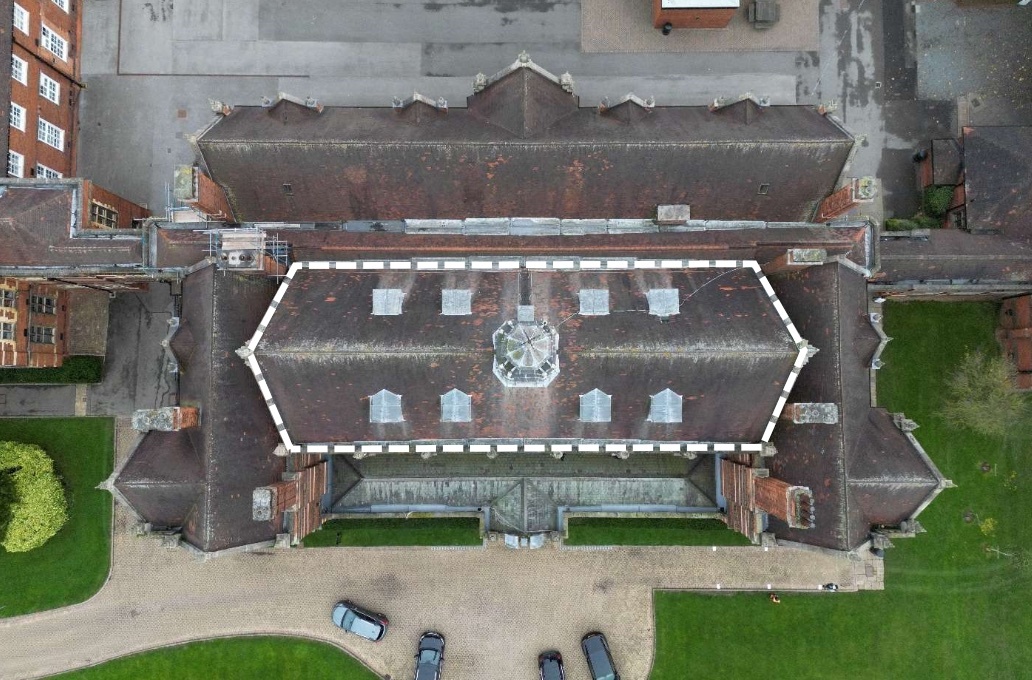
Aerial view of Great Hall with roof in scope highlighted.
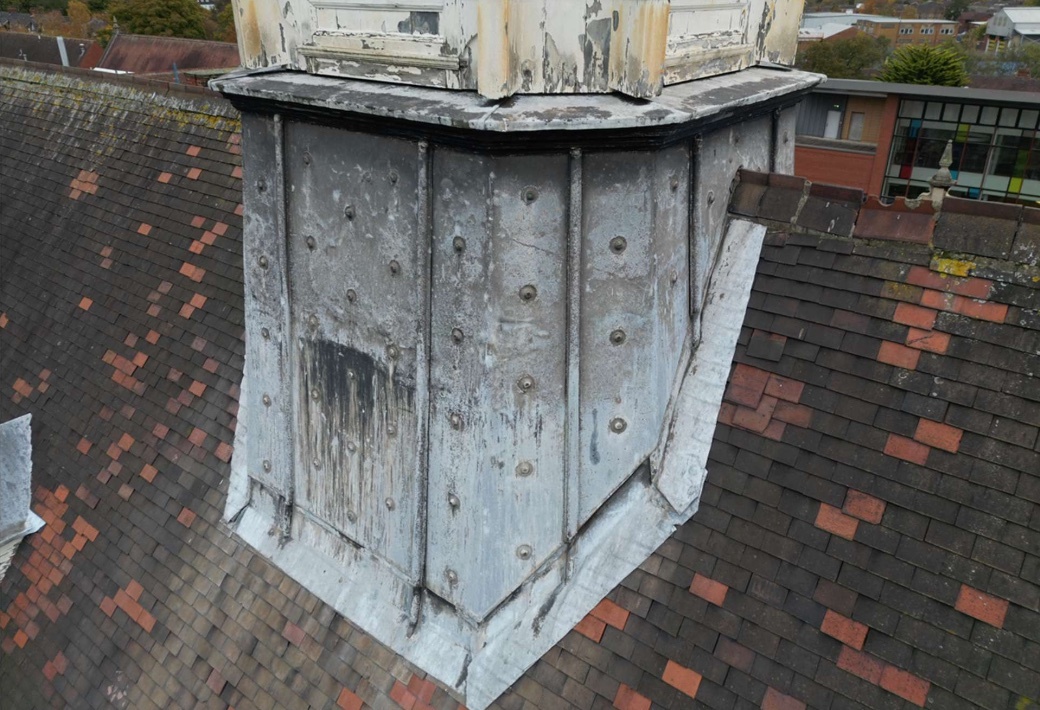
General view on lead cladding around perimeter of clocktower. Staining and weather-related degradation of existing lead.
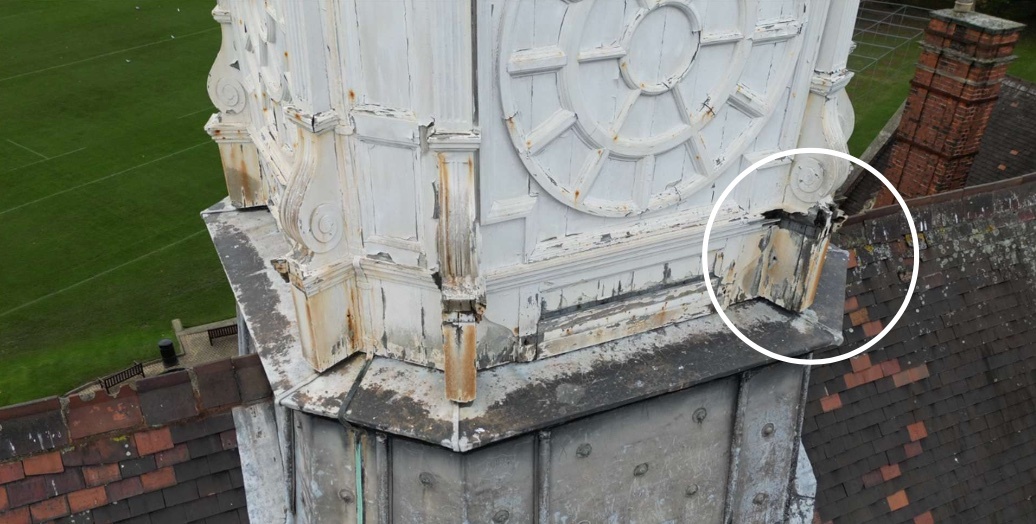
Base of clocktower (east) - Staining and peeling paint to base of clock tower plaster. Timber fully exposed (highlighted) and showing signs of decay.
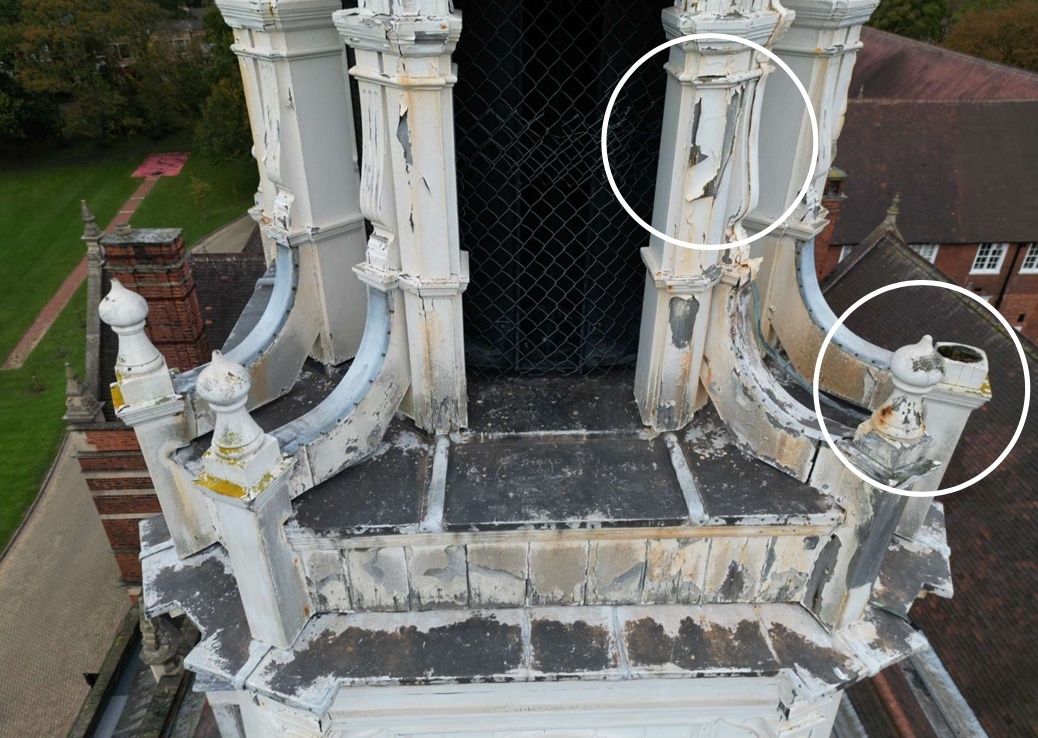
Base of cupola (south) - Staining and peeling of paint to timber elements. Timber fully exposed in some areas and showing signs of decay. Defects typical on each elevation. Southeast finial missing and remnants of what appear to be decayed material is now exposed.
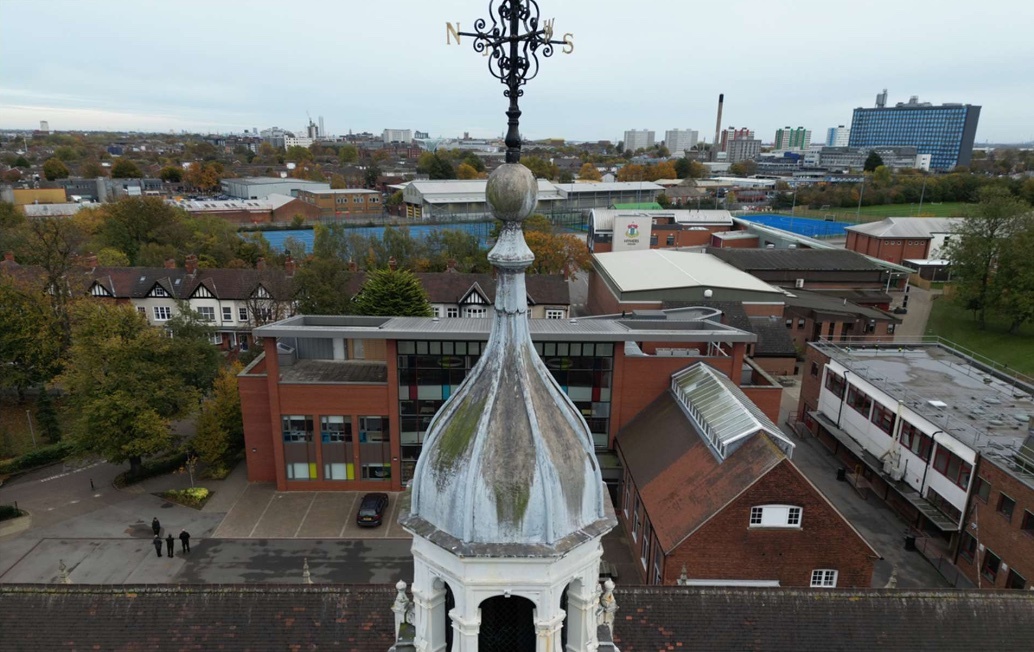
Cupola dome –water staining and weather-related degradation of lead. In certain locations there appears to be a slight opening of the standing seams.
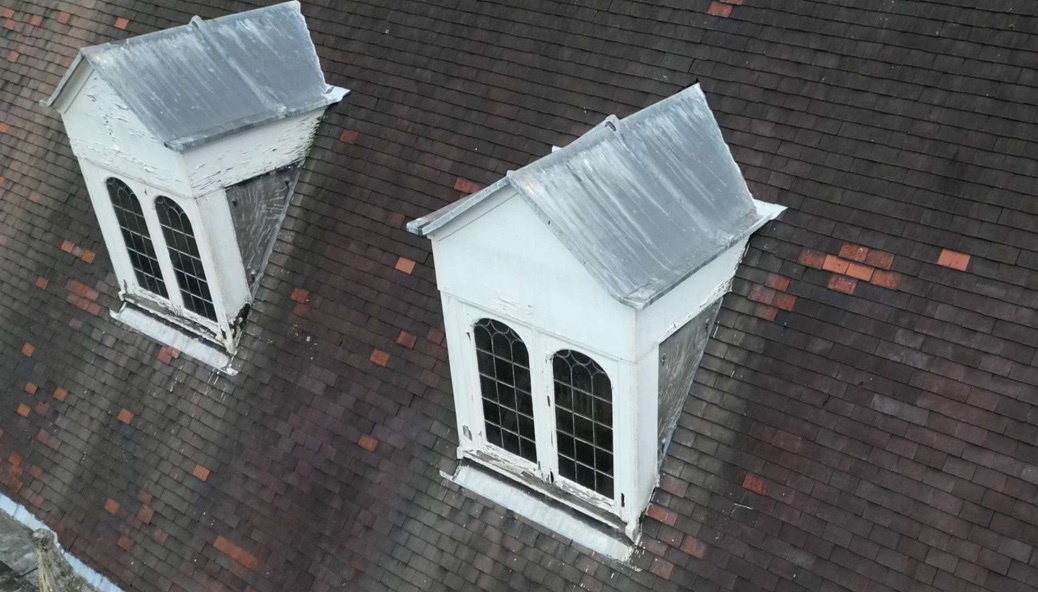
Pair of dormer windows on western pitch. Blistering of paint to timber panelling, and significant degradation of paint on the timber sill member. Defects are typical across all dormers on both sides of the roof.
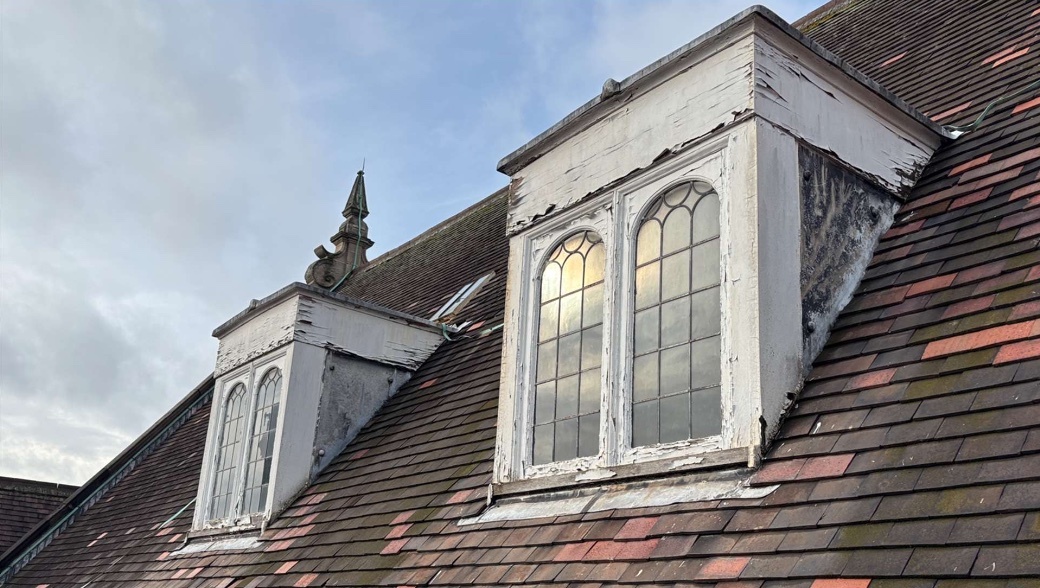
Pair of dormer windows on eastern pitch. Widespread peeling of paint to timber fascias and lead side panels, significant loss of paint on timber sill member.
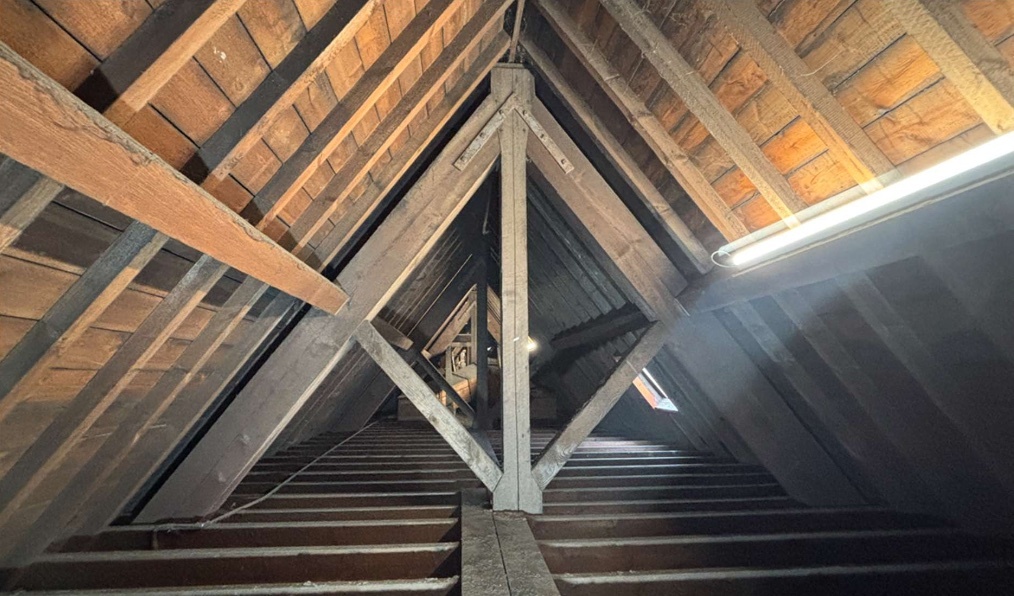
Accessible roof space over main hall, looking North. Top portion of braced arch king -post truss above ceiling level. Central boarding provides access throughout but is limited to centre of the roof space. Purlins, rafters, ceiling joists and trusses in good condition with no obvious defects or signs of water ingress.
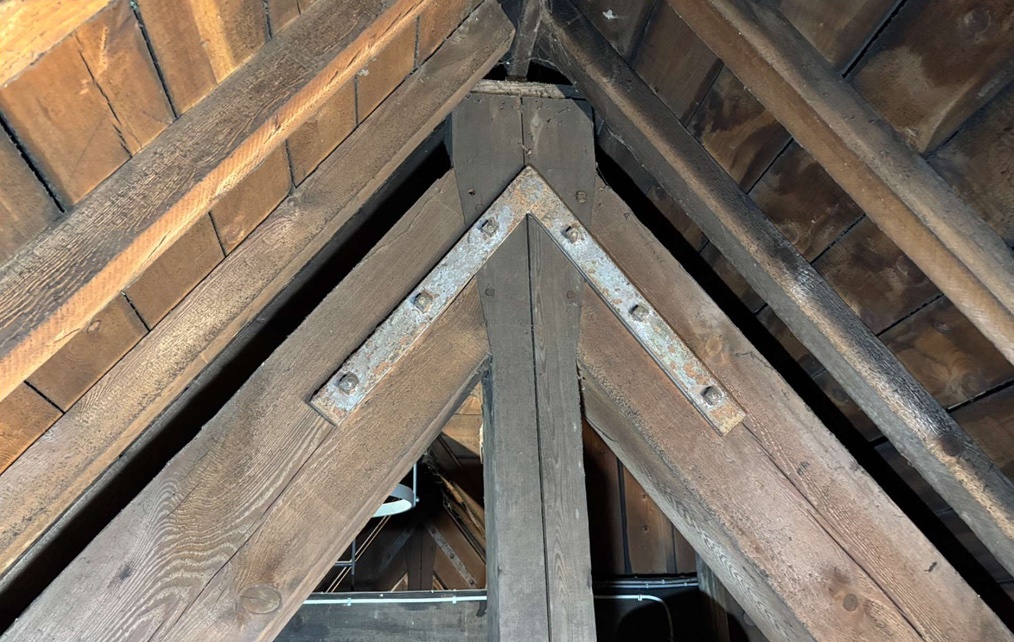
Metalwork bracketry in reasonable condition with minor surface corrosion.
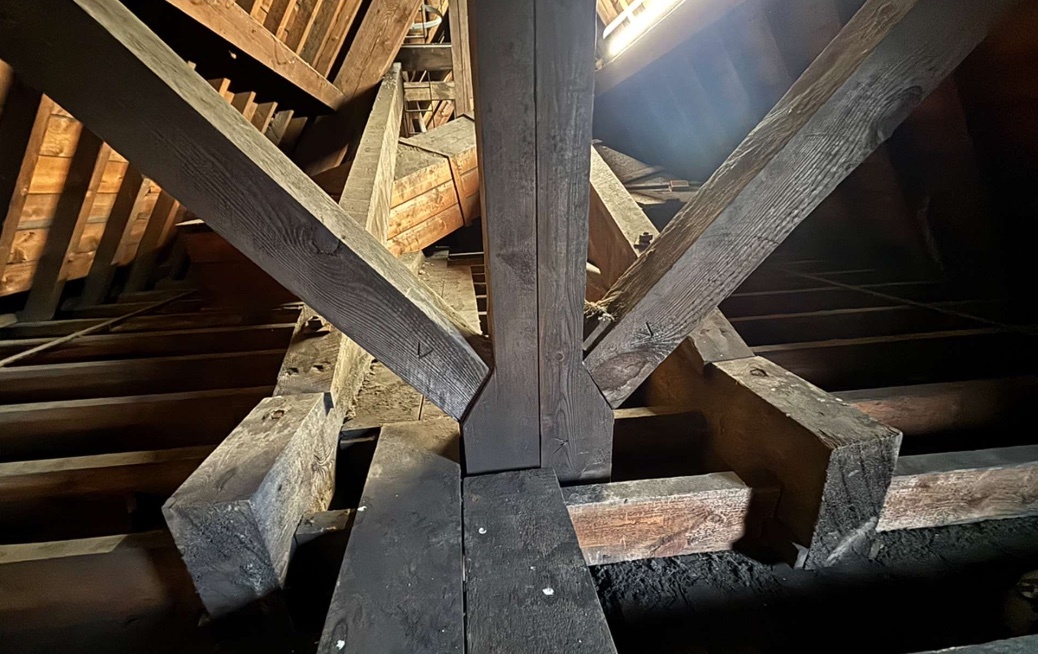
Accessible roof space over main hall, looking North. 125mm wide x 275mm deep timber raking braces back to clocktower structure. Bracing members in good condition. Timber joints tight.
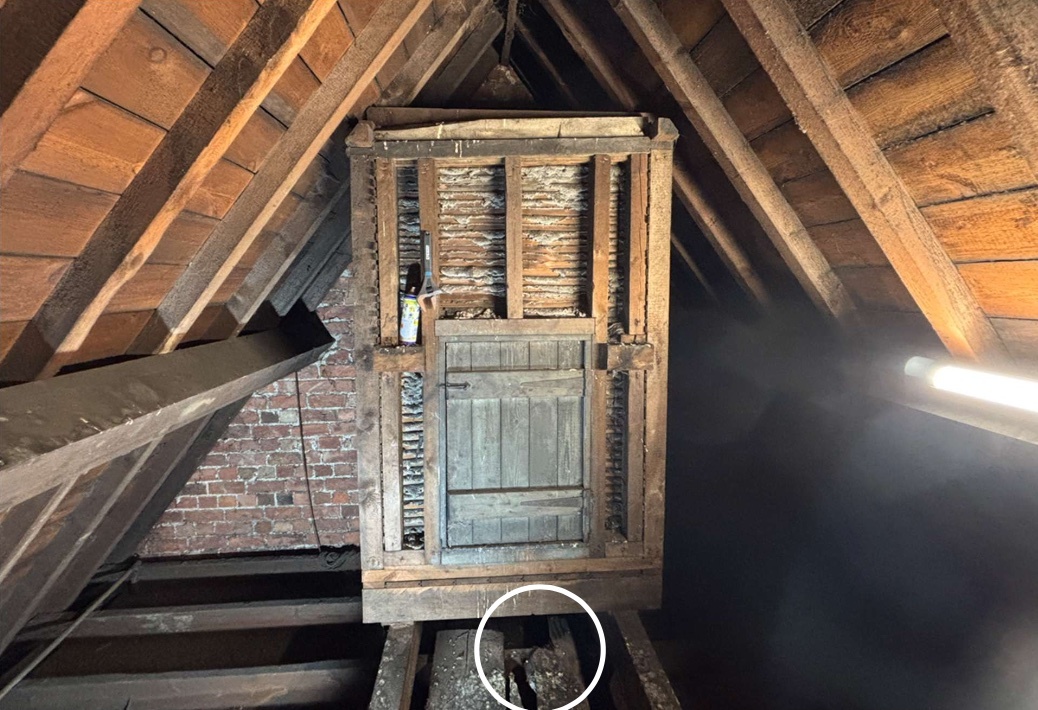
Accessible roof space over main hall, looking North. Timber framing of bell cote generally in good condition. Access board rotten at its end.